While the 2026 World Cup captured global attention, one of football’s most relevant connection for investors dates back four decades.
The Goal That Changed More Than Football
On June 22, 1986, Argentina faced England in the World Cup quarterfinal at Mexico City's Estadio Azteca. Argentina's attacking midfielder, Diego Maradona, collected the ball inside his own half and over the next eleven seconds, dribbled past five defenders before scoring what would later be voted FIFA's "Goal of the Century."
What made the run remarkable was that there was no elaborate sequence of feints or sharp changes in direction. Maradona dribbled forward in almost a straight line, with only subtle shifts in pace. So why did five professional defenders provide an opening?
The Maradona Theory of Interest Rates
In a 2005 speech, former Bank of England Governor Mervyn King introduced what he called the "Maradona Theory of Interest Rates." His observation was simple: England's defenders reacted not to what Maradona did, but to what they believed he was about to do.
King argued that monetary policy works similarly. Financial markets continuously incorporate new information, from inflation data and employment reports to central bank speeches, well before policymakers formally change interest rates. When a central bank is credible, expectations influence financial conditions long before an official rate decision, allowing communication to become part of the policy toolkit.
Why the Debate Has Returned
The discussion has taken on new relevance after several years of unusually volatile economic conditions. The pandemic, supply-chain disruptions, persistent inflation, and geopolitical shocks repeatedly forced central banks to adjust policy more quickly than many had anticipated. In those environments, detailed forward guidance became difficult to maintain as economic conditions evolved. This raises the question of how much policymakers should communicate in advance and whether markets have become too dependent on interpreting central bank guidance.
A New Direction at the Federal Reserve
Maradona Theory is back at the center of the monetary policy conversation in 2026. Kevin Warsh, who became Federal Reserve Chair in May 2026, has made communication reform one of his earliest priorities. At his first Federal Open Market Committee (FOMC) meeting in June, borrowing rates were held steady at 3.5-3.75%, and the written policy statement came in at around 130 words, down from above 300 in recent meetings, with forward guidance removed. Warsh also declined to submit his own projections to the dot plot.
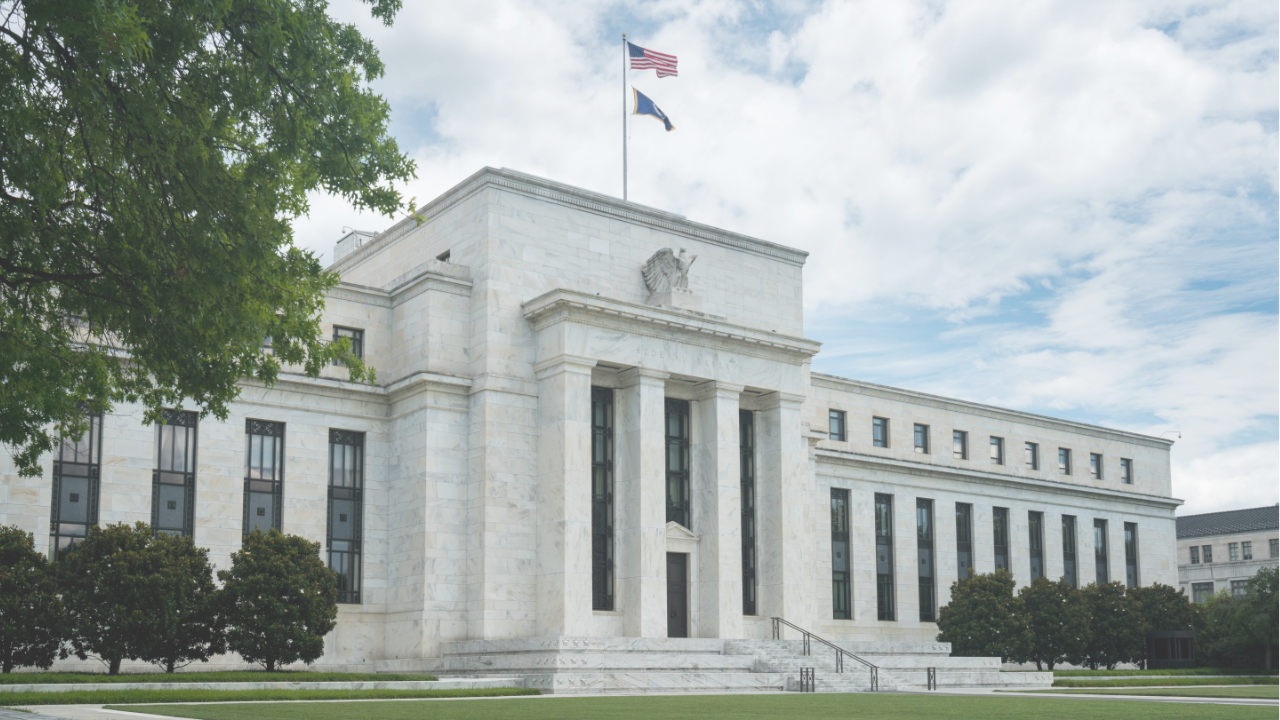
Shortly afterward, Bloomberg reported that Warsh had asked Mervyn King to co-chair a new Federal Reserve communications task force, one of five new review panels. The economist who built his career showing that clear communication could do the work of policy is now being asked whether the Fed has leaned too heavily on that channel.
Transparency Has a Trade-Off
The debate over forward guidance has attracted significant attention across capital markets. Supporters argue that transparent communication reduces uncertainty, helping businesses and investors make better long-term decisions. Critics argue that once policymakers strongly signal a future policy path, markets immediately price in those expectations. If economic conditions later change, reversing course can amplify volatility and complicate future policy decisions.
Reading Between the Lines
A rate decision that matches expectations may cause little reaction, while a single phrase in a press conference can shift the expected path for the next meeting, moving yields, currencies, and equities before any policy actually changes. Research from the NBER has shown that asset prices begin adjusting 25 days before an official policy announcement as investors continually revise expectations using incoming information.
The 2-year Treasury yield illustrates this well. It is highly sensitive to expected future short-term rates and functions as a running market estimate of where the Fed is heading over the next two years, updating with every inflation report and policymaker speech, instead of waiting for an official rate decision. The same principle extends to equities, where investors continuously reassess earnings expectations, economic growth, and monetary policy in tandem.
As the Fed evaluates how much forward guidance to provide, investors may increasingly rely on market-based indicators to interpret how expectations are changing in real time.
From the Pitch to the Portfolio
For investors, the challenge is not predicting the Fed's next decision but understanding how changing expectations are already reflected across markets. That is a measurement problem as much as a forecasting problem.
MarketVector approaches this challenge differently. Rather than making discretionary forecasts about monetary policy or market direction, MarketVector Indexes applies transparent, rules-based methodologies to measure how markets have incorporated new information. When communication frameworks shift, as they are shifting now, a consistent methodology gives investors an objective benchmark for evaluating market outcomes.
Measuring that process accurately means capturing it where it actually happens. MarketVector's suite of 24/5 Continuous Equity Indexes, including the MarketVector™ US Listed AI 10 Index (MVUAI10), the MarketVector™ US Listed China 10 Index (MVUCH10), the MarketVector™ US Listed Defense 10 Index (MVUDF10), and the MarketVector™ US Listed Innovators 100 Index (MVIN100), are built on transparent rules and calculate prices continuously outside of regular U.S. market hours, because expectations do not stop forming when exchanges close. Global news, economic releases, and central bank communication can move markets at any hour, making continuous benchmarks progressively more relevant.
Source: MarketVector. Data from July 1, 2025 to July 14, 2026.
Forty years after Maradona’s “Goal of the Century,” the lesson still holds. Like defenders who repositioned for a move that never came, markets are constantly acting on what they expect will happen next, and the largest market moves often happen when expectation and reality diverge.
Sources:
FIFA World Cup 2026 - Official Site
Maradona's Goal of the Century - Britannica
Mervyn King's 2005 Speech - Bank of England
Kevin Warsh Sworn In as Fed Chair - Federal Reserve
Warsh's First FOMC Meeting - CNBC
Warsh Taps King for Fed Task Force - Bloomberg
Warsh's Communication Reform Plans - CNBC
Markets Move Before Fed Decisions - NBER
What Drives Treasury Yields - CME Group
MarketVector 24/5 Thematic Equity Indexes - MarketVector
About the Author(s):
Nolan Borders is a 2026 intern at MarketVectorTM Indexes based in New York City. Nolan is currently a Business Administration major with a concentration in Marketing and a minor in Psychology at Marist University.
For informational and advertising purposes only. The views and opinions expressed are those of the authors but not necessarily those of MarketVector Indexes GmbH. Opinions are current as of the publication date and are subject to change with market conditions. Certain statements contained herein may constitute projections, forecasts, and other forward-looking statements that do not reflect actual results. It is not possible to invest directly in an index. Exposure to an asset class represented by an index is available through investable instruments based on that index. MarketVector Indexes GmbH does not sponsor, endorse, sell, promote, or manage any investment fund or other investment vehicle that is offered by third parties and that seeks to provide an investment return based on the performance of any index. The inclusion of a security within an index is not a recommendation by MarketVector Indexes GmbH to buy, sell, or hold such security, nor is it considered to be investment advice.
Get the latest news & insights from MarketVector
Get the newsletterRelated:
Most popular
-
 Commentary
When Markets Think Like Defenders
-
 Commentary
Goal! Small Country, Big Impact